
Introduction
In modern construction, industrial maintenance, and other engineering projects, scaffolding plays a vital role by providing temporary working platforms and ensuring the safety of workers working at height. From residential buildings to commercial complexes and industrial construction sites, the erection of scaffolding directly affects worker safety, construction efficiency, project schedules, and overall costs.
Factors affecting scaffolding performance include material quality, pipe specifications, structural design, and surface protection methods. High-quality scaffolding pipes, steel tubes, and connection systems determine the overall load capacity, stability, and service life of the structure. Understanding these factors helps buyers select or customize suitable scaffolding solutions.
According to the U.S. Occupational Safety and Health Administration (OSHA), scaffolding must be able to withstand its own weight and at least four times its maximum expected load. This article explains how to select a high-quality scaffolding system.
What Are the Main Structural Steel Components of Scaffolding?
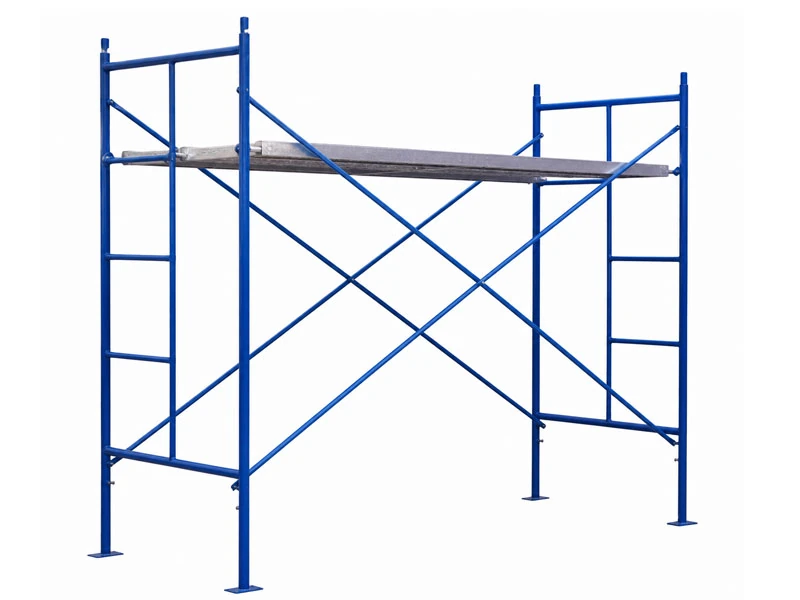
A complete scaffolding system is not simply a combination of steel tubes. It consists of multiple structural components working together to create a stable temporary structure.
Scaffolding Pipes
Scaffolding tubes are the main load-bearing components in scaffolding systems and are typically made of carbon structural steel.
Commonly used carbon steel grades include Q195, Q235, and Q345.
Scaffolding Framework:
The scaffolding framework determines how individual components work together as an integrated system. Different construction environments require different designs.
Common scaffolding structures include:
| Type | Features | Applications |
| H Frame Scaffolding | Stable and easy to install | Building construction, exterior walls |
| Ladder Frame Scaffolding | Flexible access and lightweight design | Interior finishing, maintenance |
| Mason Frame Scaffolding | Wide platform and high load capacity | Masonry and commercial projects |
| A Frame Scaffolding | Compact and portable structure | Small construction and repair work |
| Ringlock Scaffolding System | Modular and versatile connection | Bridges, large projects |
| Cuplock Scaffolding System | Strong connection and high load capacity | Industrial and high-rise projects |
For projects requiring frequent installation and relocation, H-frame systems are often preferred because of their fast assembly and standardized design.
Other Structural Components
A complete scaffolding system requires more than steel tubes. Additional structural components ensure stability and operational safety.
Common scaffolding components include:
- Cross Braces
- Base Jacks
- Couplers
- Steel Planks
- Adjustable Props
Therefore, the safety and durability of a scaffolding system depend on the proper integration of all structural members rather than individual steel tubes alone.
How to Select the Right Scaffolding Pipes and Steel Tubes?
Choosing suitable scaffolding tubes requires evaluating material properties, dimensions, corrosion resistance, and application requirements.
Consider the Material Grade and Steel Quality
Material quality is one of the most important factors when selecting scaffolding components. For heavy-duty construction applications, carbon steel grades such as Q195 and Q235 are commonly used for scaffolding components.
Check Pipe Dimensions and Load Capacity
Before purchasing scaffolding tubes, buyers should evaluate the following specifications:
| Specification | Importance |
| Outside diameter | Affects structural strength and stability |
| Wall thickness | Determines load-bearing capacity |
| Length | Affects scaffolding layout and installation design |
| Weight per meter | Indicates material usage and handling requirements |
For example, scaffolding used for heavy industrial maintenance may require thicker tubes and stronger connections than scaffolding used for temporary residential renovation projects.
Selecting the appropriate specifications helps reduce unnecessary waste while ensuring the structural stability and safety of the scaffolding.
Evaluate Surface Treatment and Corrosion Resistance
Because scaffolding is frequently exposed to outdoor environments, corrosion protection is important for extending its service life.
Common surface treatments include:
| Treatment | Characteristics |
| Electro galvanizing | Cost-effective corrosion protection for general construction |
| Painting | Provides surface protection and customizable appearance |
| Hot-dip galvanizing | Suitable for high-corrosion environments with longer protection life |
Key Factors When Choosing a Reliable Scaffolding Supplier
Selecting the right supplier is as important as selecting the right steel components. A professional supplier should provide not only quality products but also strong manufacturing capabilities, inspection systems, and project support.
Manufacturing Capability
A reliable supplier should have strong production capabilities, including:
- Advanced production equipment
- Stable steel tube manufacturing processes
- Welding quality control systems
- Surface treatment capabilities
A manufacturer with its own production line can better control product consistency, dimensional accuracy, and delivery schedules.
Product Standards and Quality Inspection
Quality inspection is crucial for ensuring the reliability of scaffolding. Before purchasing scaffolding products, customers should verify that the supplier can provide relevant qualifications and inspection reports, as well as quality control processes.
For steel structure products, strict quality control should be implemented at every stage from production and processing to final inspection.
Customization and Project Support
Different engineering projects require different scaffolding sizes, and their load-bearing and corrosion protection requirements also vary. Therefore, customization is an important consideration when selecting a supplier.
A professional supplier should be able to provide:
- Custom sizes
- Special structural designs
- Different surface treatments
- Complete scaffolding solutions
Why Choose Our Scaffolding Products?
Friend Steel Pipe provides steel scaffolding components designed for construction, maintenance, and industrial applications. The products are designed to provide structural reliability, manufacturing consistency, and flexible customization options.
As an experienced carbon steel pipe manufacturer, Friend Steel Pipe uses quality carbon steel materials and professional manufacturing processes to produce scaffolding systems for different construction requirements.
Mature and Professional Manufacturing Capability
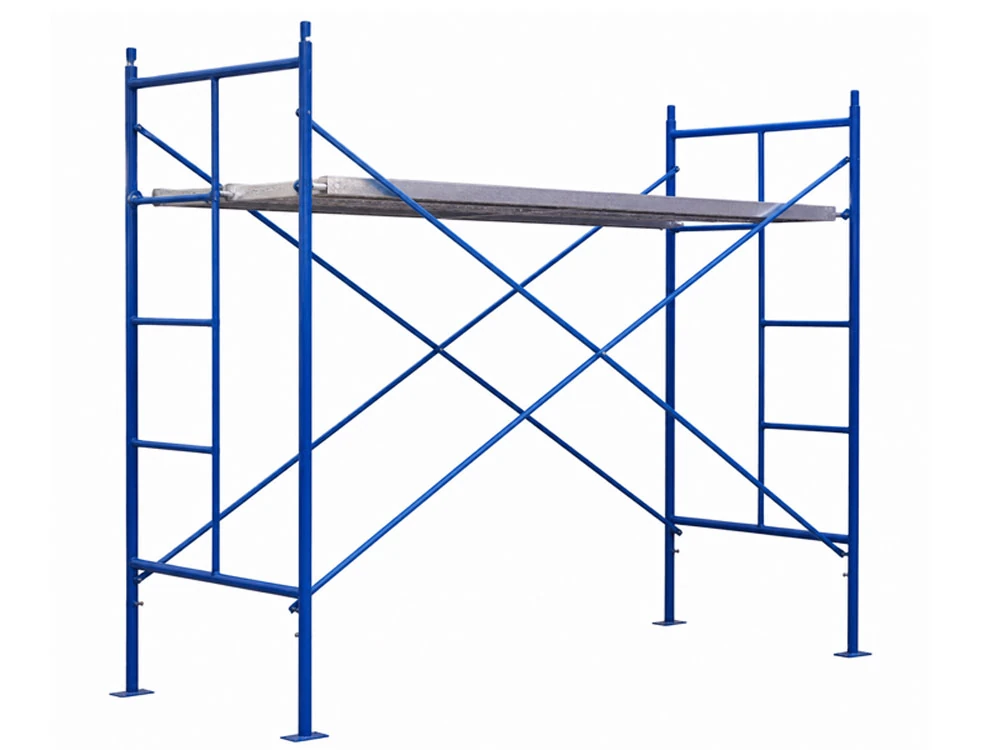
The heavy-duty steel scaffolding frame is manufactured using high-quality Q195/Q235 carbon structural steel welded tubes.
Main specifications include:
| Component | Specification | Function |
| Main frame | Q195/Q235 carbon structural steel tube | Provides primary load-bearing support |
| Main tube | Diameter: φ42.2 mm | Ensures structural strength |
| Wall thickness | 1.5–2.5 mm | Balances strength and weight |
| Cross brace | φ21.3 mm low-carbon steel tube | Improves stability |
| Connecting pin | φ36 mm round steel bar | Locks frame connections |
The main frame is manufactured using high-frequency welding technology and can be customized with different surface protection methods:
- Hot-dip galvanizing
- Electro galvanizing
- Painting
These options allow customers to select suitable corrosion protection methods based on project environment and budget requirements.
Mobile Tower Components and Safety Features
For mobile scaffolding applications, Friend Steel Pipe provides supporting components designed for easy movement and improved stability.
Caster and Base Jack
The mobile tower can be equipped with heavy-duty universal casters.
Features include:
- Four heavy-duty wheels
- Load capacity ≥250 kg per wheel
- Dual braking system (wheel brake + swivel brake)
The base jack allows height adjustment on uneven surfaces:
- Adjustment range: ±150 mm
- Helps maintain vertical alignment
These features improve flexibility during indoor construction, maintenance, and renovation projects.
Platforms and Guardrail System
Safety accessories are essential parts of a complete scaffolding solution.
The platform system includes:
- Steel working planks
- Secure hook connections
- Anti-slip surface design
For elevated working platforms, the guardrail system includes:
- Double horizontal rails
- Rail heights of 1.0 m and 0.5 m
- Toe boards with height ≥150 mm
These components help reduce the risk of workers or tools falling from elevated working areas.
Industry Certifications and Quality Management
Friend Steel Pipe implements internationally recognized management systems to support product quality and manufacturing control.
Certified management systems include:
| Certification | Standard |
| Quality Management System | ISO 9001 |
| Environmental Management System | ISO 14001 |
| Occupational Health and Safety Management System | ISO 45001 |
These certifications demonstrate the company’s commitment to quality management, environmental responsibility, and occupational health and safety.
Project Case: Commercial Complex Renovation in Malaysia
Customer Challenge
A large shopping mall interior renovation project covering 8,000 m² required extensive work at height, including HVAC duct installation, ceiling panel installation, and fire protection pipe connections.
In addition, the existing marble flooring required strict protection, as moving scaffolding could easily cause scratches and surface damage.
Customer Pain Points:
Low scaffolding efficiency: Traditional scaffolding setup and dismantling were time-consuming and could not meet the tight 8-week schedule.
Frequent relocation demands: Over 30 separate work areas required flexible and efficient scaffolding relocation.
Floor protection requirements: Existing marble floors were vulnerable to scratches during scaffolding relocation.
Work-at-height safety challenges: Multiple overhead installation tasks required stable and reliable access solutions.
Solution
Friend Steel Pipe provided 8 sets of MF1219 mobile steel tower scaffolding systems.
Configuration included:
- Four working platforms per tower
- Working height: 8 m
- Tube diameter: 48 mm
- Q345 high-strength steel
- Hot-dip galvanized surface treatment
- PU universal casters
- Dual braking system
- Anti-slip perforated steel platforms
- Double guardrails and toe boards
Each tower had a designed safety load capacity of 750 kg.
Project Results
Compared with traditional scaffolding:
- Two workers could relocate one tower within 15 minutes..
- Approximately 80% reduction in relocation time.
- Eight towers served eight working areas simultaneously..
- PU wheels protected marble flooring without scratches.
- Project completion was achieved 10 days ahead of schedule.
Following the successful application, the customer adopted the mobile tower solution for three additional projects.
FAQ
Q1. How do I choose the right scaffolding components?
When selecting scaffolding components, consider load requirements, working height, project environment, and local standards. Standard sizes are 1219×1700mm, 1930×1219mm, and 1219×914mm. Custom sizes are also available upon request.
Q2. Can mobile towers be used on uneven ground?
Yes, but proper adjustment is required. The base jacks allow independent height adjustment within approximately ±150mm to maintain vertical alignment. If ground slope exceeds about 3° (approximately 5 cm per meter), additional leveling measures should be applied before use.
Q3. Does a mobile tower need inspection after every movement?
Yes, the following checks must be performed after each movement: (1) All four casters are fully braked (with double locking through wheel brakes and swivel brakes); (2) The verticality of the tower is visually checked (can be verified with a spirit level); (3) All pin connections are confirmed to be secure; (4) All pedal latches are confirmed to be in place; (5) The guardrails and kick plates are fully installed.
Q4. Steel or aluminum mobile tower—which is better?
Steel frame scaffolding offers higher load capacity and lower cost, but it is heavier (around 180–250 kg for a 4-level tower), making it suitable for frequent-use, heavy-load, and budget-conscious projects. Aluminum alloy towers are lightweight (around 120–160 kg for a 4-level tower), rust-resistant, and easier to move, but they costs 2–3 times as much as steel options. For humid or coastal environments, aluminum alloy or hot-dip galvanized steel is recommended.
Q5. Can mobile scaffolding be used as a lifting platform?
No. Mobile scaffolding is designed as a working platform for personnel, not for material lifting. Customers should not install lifting equipment or exceed platform load limits. Separate lifting equipment should be used for material transportation.
Conclusion
The quality of scaffolding depends not only on the steel used, but also on the structural design and manufacturing process. These factors are crucial for scaffolding safety and overall performance.
When purchasing scaffolding products, buyers should carefully select suppliers to reduce communication barriers and purchasing risks. High-quality scaffolding steel tubes, reliable connection systems, and professional production support help ensure the stable performance of scaffolding in various construction, maintenance, and industrial applications.
As a carbon steel pipe manufacturer, Friend Steel offers customized scaffolding solutions with a variety of materials and processes to choose from, including H-frame scaffolding, heavy-duty frames, and related structural components. We also have extensive experience solving customer problems, and numerous case studies have proven us to be a reliable carbon steel pipe manufacturer.