Key Takeaways
- SHS and RHS are both structural hollow sections, but their different geometries make them suitable for different structural conditions.
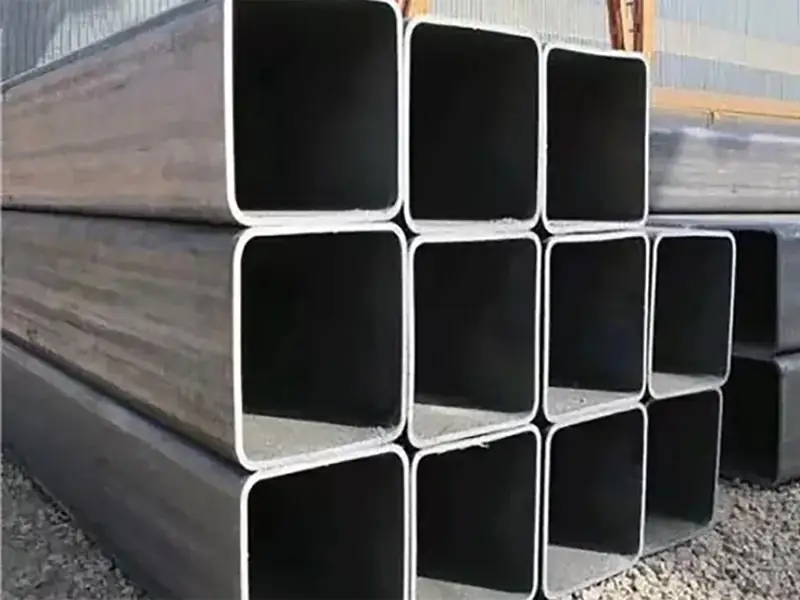
- SHS is square steel tube. Its four sides are almost equal. You can choose it if you build columns, posts, bracing or symmetrical frames.
- RHS is rectangular steel tube. Its width and height are different. It works well when you need beams, horizontal supports or long-span parts.
- Neither type is always stronger. Its performance will change if you change steel grade, size, wall thickness, span or load direction.
- A good section shape is not enough for outdoor or corrosive work. You need to select a surface finish suited to your working environment.
- Before you ask for a price, list out these details: section type, size, wall thickness, steel grade, length, quantity and surface treatment.
Introduction
When choosing between SHS and RHS, look first at load conditions instead of product names. A tube’s cross-section shape decides how it works under different forces.
Steel hollow tubes see broad use in building, factory and machine-related projects. Their closed-wall design delivers solid structural performance. If fabricators process these tubes, they will get smooth surfaces for welding and extra finishing work.
SHS and RHS are common picks. Though they look alike, their shapes alter bending strength, anti-buckling ability and load-carrying efficiency.
What Are SHS and RHS?
SHS and RHS are both structural hollow sections with closed steel profiles. Their different cross-sectional shapes affect how they perform under bending, compression, and loading from different directions.
What Is a Square Hollow Section (SHS)?
SHS has even strength in all directions and has no weak sides. It easily bears loads from all angles and fits structural parts like columns and support frames perfectly. This stable performance makes SHS a reliable choice for multi-directional force scenarios.
However, the symmetrical shape does not mean an SHS is always stronger than a rectangular hollow section (RHS). Actual performance depends on the section size, wall thickness, material grade, span, and load conditions. These factors should be checked against the design requirements before selecting a steel tube.
What Is a Rectangular Hollow Section (RHS)?
Rectangular hollow section (RHS) is a closed steel tube with different width and height dimensions. Its rectangular profile can provide greater stiffness in one direction when the deeper side is positioned along the main bending axis.
SHS vs RHS: What Are the Main Differences?
The main difference between SHS and RHS is their cross-sectional geometry. SHS provides more balanced behavior about its principal axes, while RHS can be optimized for bending in one direction.
| Feature | SHS | RHS |
| Cross-section | Square | Rectangular |
| Side dimensions | Approximately equal | Unequal |
| Axis behavior | More balanced | More directional |
| Bending | Balanced about principal axes | Can be optimized for one direction |
| Typical role | Columns, posts, bracing | Beams, supports, spans |
| Common design focus | Multi-directional loading | Directional bending |
Neither SHS nor RHS has an inherent strength advantage over the other. The table provides a basic comparison and cannot replace structural calculations. A larger RHS may resist bending better than a smaller SHS, while a thick-walled SHS may provide higher load-bearing capacity than a thin-walled RHS.
For a meaningful comparison, confirm the section size, material grade, wall thickness, span, and load conditions before making a selection.
Why Does Section Shape Affect Bending?
Section shape directly affects how a steel tube resists bending. Placing more material farther from the bending axis generally increases stiffness in that direction. This is why the greater depth of an RHS can be useful when the main bending force acts along one axis.
One test showed a 26% reduction in deformation for RHS compared with SHS at a similar weight, but this result should not be treated as a universal rule. Actual performance depends on the specific section dimensions and loading conditions.
Wall Thickness, Compression and Buckling
Wall thickness is another key factor in the performance of hollow steel tubes. Tubes with the same outer dimensions can have different weights and load-bearing capacities when their wall thicknesses differ.
Wall thickness also affects resistance to compression, local deformation, and buckling. Therefore, procurement documents should specify wall thickness together with the outer dimensions rather than stating only the tube size.
Applications of SHS and RHS
When Is SHS a Practical Starting Point?
SHS works best for parts needing balanced performance in two directions, such as columns and bracing frames. Its symmetrical shape eases manufacturing work for projects with changing load directions.
SHS tubing is widely applied in infrastructure, industrial facilities and public buildings. These cases represent typical usage scenarios instead of overall market share.
When Is RHS a Practical Starting Point?
RHS works well for designs with main bending from one direction. You can turn its deeper side toward the main load for stronger stiffness, and no extra material is needed. This makes it a good pick for beams and horizontal support parts.
Actual section data drives your final choice, and RHS does not always perform better than SHS.
How Should You Choose and Specify Hollow Sections?
Start With Section Type, Dimensions and Wall Thickness
A clear RFQ should identify whether the buyer needs SHS or RHS.
Your request for quotation should clearly state the hollow-section type, outer size and wall thickness.
Include further details such as length, quantity, steel grade, surface finish and project use.
Specify the Material Grade
Common steel grades for hollow sections include Q195, Q235, and Q345. Published strength values act only as reference, and real material performance receives verification through Mill Test Certificates.
Procurement documents carry clear steel-grade information. Buyers add MTC requirements for projects that need full material traceability.
Choose the Surface Treatment for the Environment
Working environment decides the right surface finish for hollow steel tubes. Common choices include black, pre-galvanized, hot-dip galvanized and painted surfaces for different service conditions. Hot-dip galvanized steel performs well for wet and corrosive outdoor locations. Coating life varies with real-world surroundings instead of following one fixed value for all galvanized goods.
Consider Inspection Before Shipment
Quality documentation is important for structural hollow sections used in engineering projects. Every shipment comes with factory test papers, and buyers can request third-party checks from groups like SGS or BV.
For overseas orders, suitable packaging is also required. Adding extra moisture protection for galvanized tubes helps cut rust risks during delivery.
Why Choose Friend As Your Supplier?
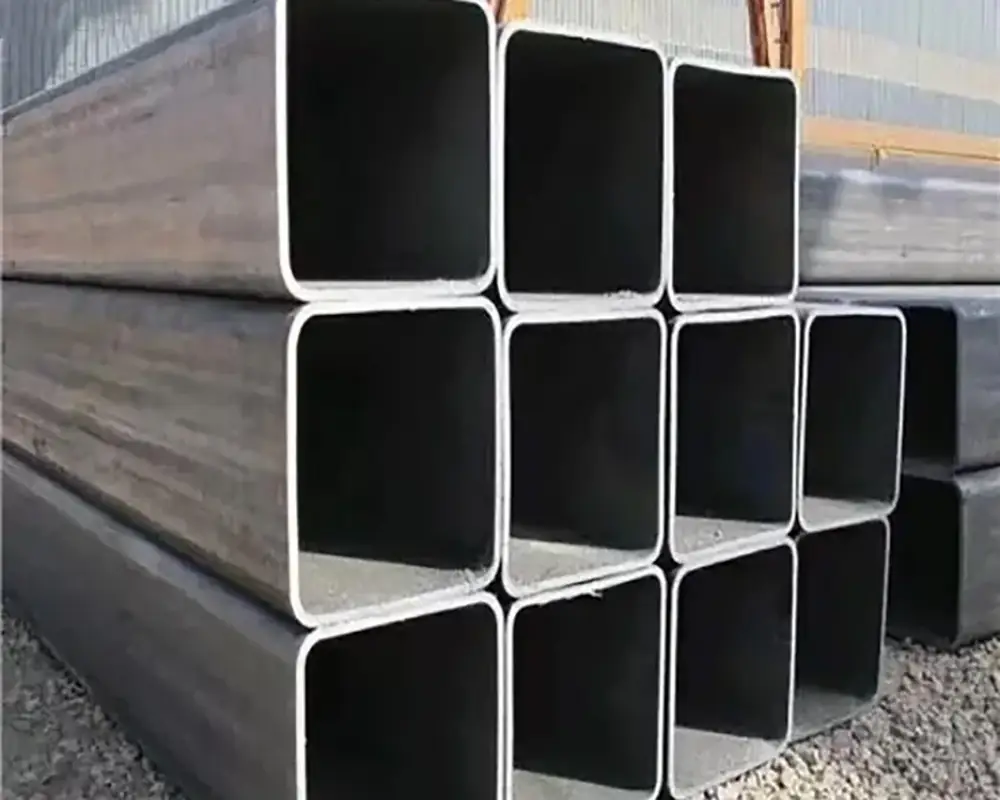
FriendSteel supplies square steel tubing in SHS and RHS profiles for construction, engineering, infrastructure, and other structural uses.
Size and Material Options
| Item | Options |
| SHS | 19×19–400×400 mm |
| RHS | 50×25–400×200 mm |
| Wall thickness | 0.6–12 mm, depending on size |
| Length | 1–12 m; 5.8 m and 6 m commonly available |
| Steel grades | Q195, Q235, Q345, SS400, STK500 |
If you need a specific size or grade, include it in the RFQ. An MTC can be provided with each shipment.
Surface Treatment and Quality
Multiple surface finishes including black, pre-galvanized, hot-dip galvanized and painted options are offered. Following ISO 1461 and ASTM A123 standards, hot-dip galvanizing delivers better rust protection for outdoor and wet-condition projects.
A full set of quality checks covers weld, tensile, flattening and flaring tests, and buyers may arrange third-party inspection from SGS or BV upon request.
Project Support and Order Service
Friend helps buyers from order details to production and delivery, so the steel can meet the needs of each project. Before production, the team checks the size, wall thickness, steel grade, length, and surface finish. For large orders, Friend can arrange production based on the confirmed details and provide inspection papers if needed. If special packing or delivery is required, buyers can discuss these needs with the team before placing the order.
Friend SHS & RHS Application Case: Three-Tier Automated Warehouse Racking
The supplied case study provides a practical example of how section geometry can influence the selection.
A car-parts manufacturer was developing a three-tier automated warehouse racking arrangement. The original concept used I-beams. Frequent forklift impacts created localized deformation in the uprights. At the same time, the 12 m beam span created excessive deflection. This caused the upper rack levels to tilt, while the AGV picking and positioning error reached approximately ±15 mm.
After load calculations, the supplier proposed 200×200×8 mm SHS for the uprights and 250×150×8 mm RHS for the beams.
The reported results were:
- Upright deformation decreased by 62% in the simulated collision test.
- Beam deflection decreased from 18 mm to 6 mm.
- AGV positioning error decreased to within ±3 mm.
- Steel consumption decreased by 17% compared with the original I-beam solution.
- Welding time decreased by approximately 30%.
These figures belong to this particular application. They should not be treated as guaranteed performance values for other rack designs.
The case does, however, illustrate the basic SHS-versus-RHS principle. The SHS was selected for the upright, where balanced geometry was useful. The RHS was used for the beam, where directional bending stiffness was more important.
Frequently Asked Questions
Is SHS stronger than RHS?
This is not always true. Real-world performance depends on steel grade, tube size, wall thickness, unsupported length and load conditions. With similar material weight, a well-chosen RHS offers better bending resistance along its main force axis compared with SHS.
Is RHS better than SHS for beams?
RHS can be advantageous when the beam mainly bends in one direction. Its greater section depth can be positioned along the primary bending axis, which may improve bending stiffness. The actual result depends on the selected dimensions and design loads.
Is SHS better for columns?
SHS can be a practical choice for columns when balanced performance in two directions is important. However, column design still needs checks for axial load, slenderness, buckling and connections.
Can SHS and RHS replace each other?
Sometimes they can, but not automatically. SHS and RHS can serve as alternatives in certain cases, though direct one-to-one swap is not safe. Identical weight or steel grade cannot deliver matching structural performance. Switching between these two tube types shifts load-bearing axes and brings different risks for beams and columns. Any replacement needs complete structural checks against the original project design requirements.
How do I choose the correct wall thickness?
Begin with design load and span, and then take unsupported length, buckling risk, connection details and relevant design rules into consideration. The thickest tube option is not always the best pick. A proper wall thickness delivers needed performance without extra waste of material.
Conclusion
Choose SHS or RHS according to real-world load requirements. SHS works well for projects that need balanced strength across several directions, while RHS delivers better performance under mainly one-direction loads thanks to its deeper section profile.
Beyond section shape, many other factors influence hollow-section selection. When handling structural-grade orders, procurement teams should match size, wall thickness, steel grade and surface finish to actual site conditions. They also need to confirm all test reports and material paperwork before placing any formal order.
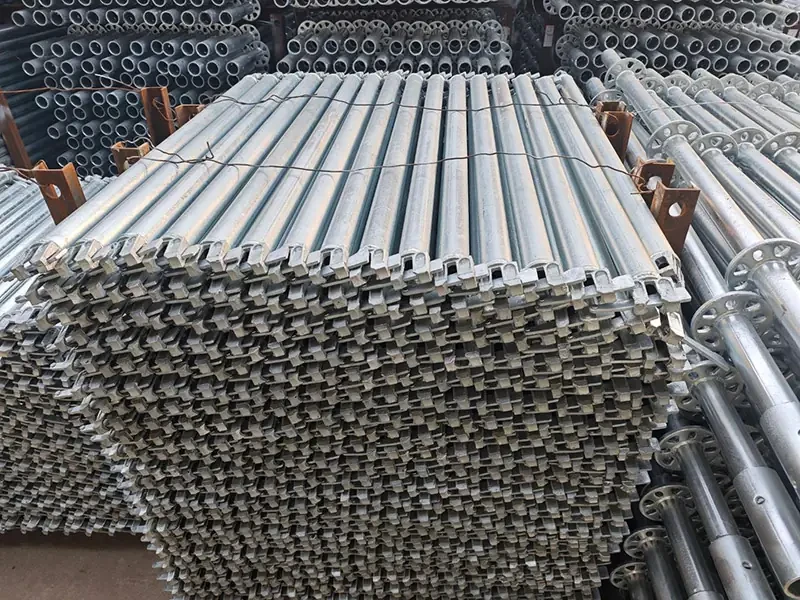
For projects that demand temporary access and structural support, FriendSteel can also supply galvanized ringlock scaffolding systems as a related solution.
Reach out to our team to explore suitable options for your steel-structure projects. We can deliver customized proposals for your business scenarios.