Introduction
In modern construction projects, safe access and stable working platforms are essential for improving work efficiency and protecting workers. A reliable scaffolding system provides strong support for workers, tools and materials during different construction stages.
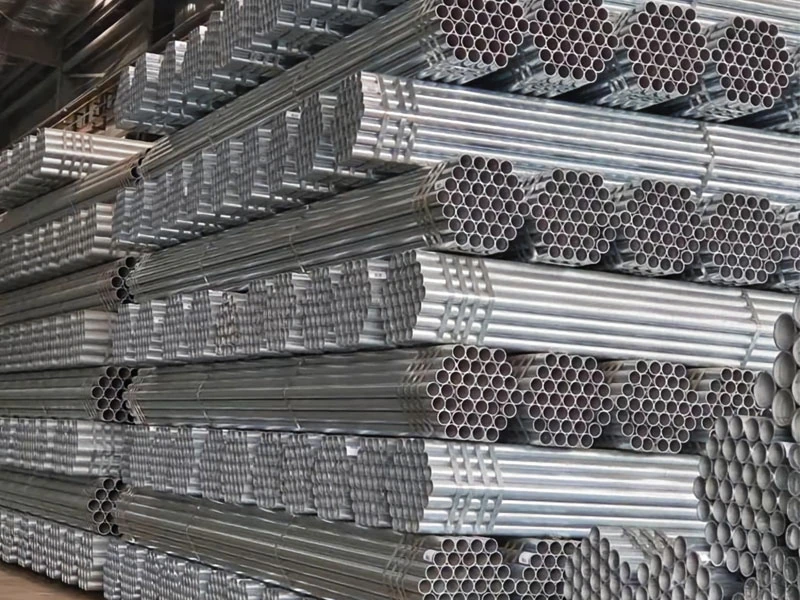
Among various scaffolding solutions, the ringlock scaffolding system has become widely used because of its modular design, fast installation and flexible structure. Compared with traditional scaffolding tube scaffold tubes and fittings, which require separate couplers for connections, ringlock scaffolding uses rosette nodes and wedge locking mechanisms to achieve quick and secure assembly.
Choosing the right scaffolding system requires careful consideration of material quality, load capacity, corrosion resistance and project requirements. This article explains the key features of ringlock scaffolding and how to select a suitable solution for construction projects.
What Is Ringlock Scaffolding System?
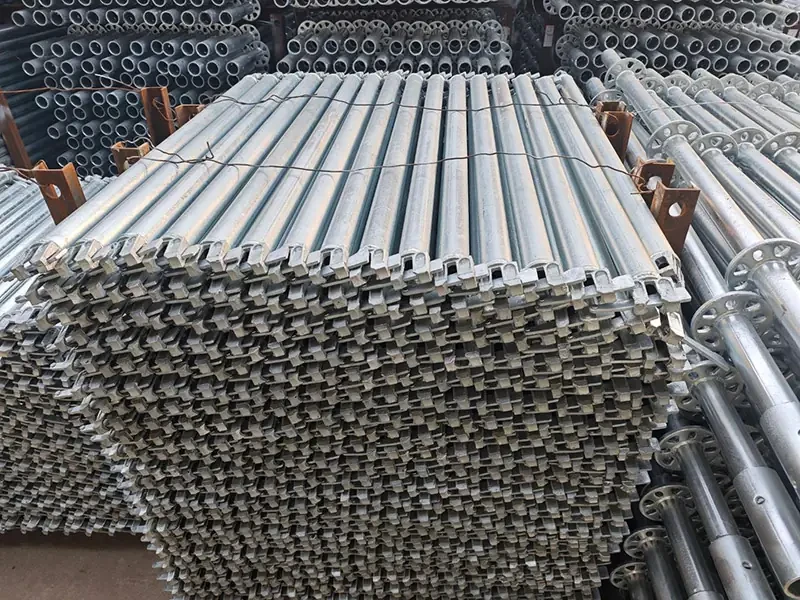
A ringlock scaffolding system is a modular structure designed to provide safe working platforms and temporary support during construction. It consists of vertical standards, horizontal ledgers, diagonal braces and other components. These parts are connected through rosette nodes and wedge pins to create a stable framework.
Vertical Standard and Rosette Node
The vertical standard is the main support component of the ringlock scaffolding system. It carries vertical loads and provides connection points for other components.
Rosette nodes are welded onto the standards at fixed intervals. They allow ledgers and diagonal braces to be installed at different positions according to project requirements.
The rosette node is the key connection part of the system. Each node has multiple openings that allow components to be connected from different directions. After the wedge pin is inserted and tightened, a secure mechanical joint is formed. This design reduces the need for bolts and helps improve assembly efficiency.
Ledger and Diagonal Brace
The ledger connects vertical standards horizontally to form the main frame of the scaffold. It supports working platforms and helps maintain structural stability during use.
The diagonal brace is installed between standards and ledgers. It strengthens the scaffold structure by reducing movement caused by horizontal forces.
Base Jack and Vertical Connection Methods
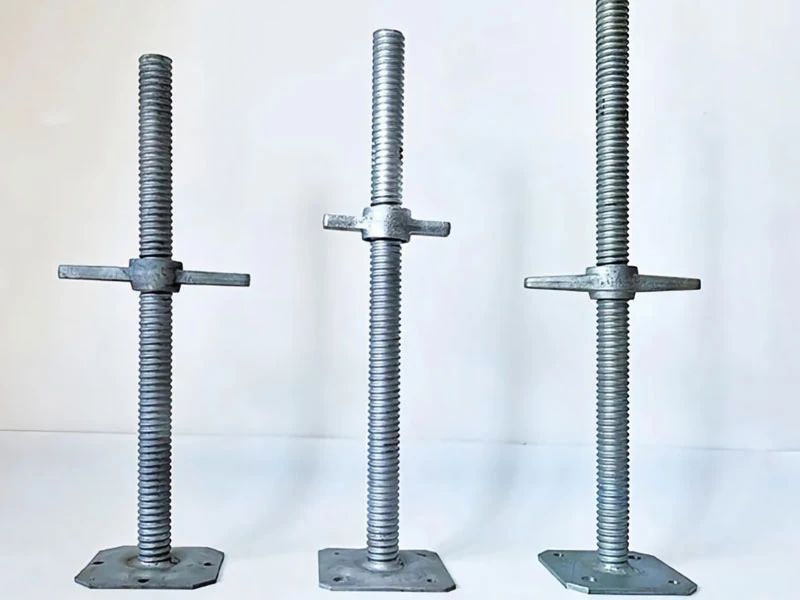
The base jack is installed at the bottom of the vertical standard. It allows the scaffold height to be adjusted and helps maintain stability on uneven ground.
Vertical standards can be connected through external sleeves or internal spigots. These connection methods extend the scaffold height while keeping the upper and lower sections properly aligned.
Hot-Dip Galvanized Protection
Ringlock scaffolding components are usually treated with hot-dip galvanizing to improve durability. A zinc coating is formed on the steel surface, which helps protect the components from moisture and corrosion during outdoor use.
This treatment also extends the service life of the scaffolding and reduces maintenance requirements.
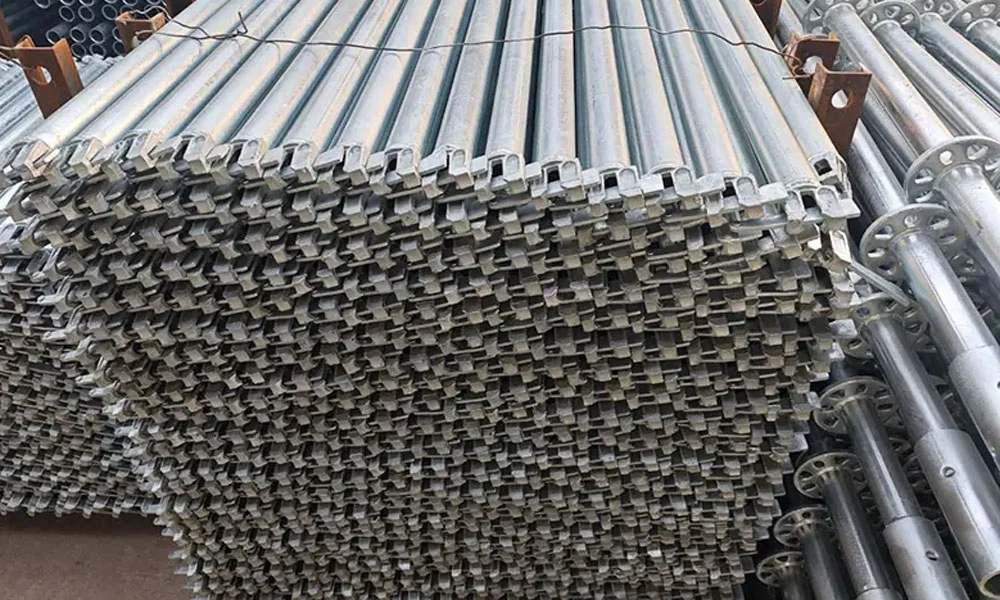
Advantages of Ringlock Scaffolding System
Ringlock scaffolding is widely used in construction because it provides fast installation and flexible structural adjustment. Its modular components allow contractors to build stable working platforms for different project requirements.
Flexible Connection Design
The rosette node is one of the most important features of ringlock scaffolding. It allows ledgers and braces to be connected in different directions.
With a 360° connection range and a minimum angle of 22.5°, the scaffold can be adjusted to fit complex construction layouts.
Fast Assembly with Secure Connections
Ringlock scaffolding uses wedge pins to lock components into the rosette nodes. After the pins are tightened, a stable connection is formed without additional bolts or loose fasteners.
This simple connection method reduces installation steps and improves work efficiency.
Durable Structure with Lower Maintenance
Most ringlock scaffolding components are protected with hot-dip galvanized coatings. The zinc layer helps prevent corrosion and improves service life, especially in outdoor environments.
Although the initial cost may be higher than some traditional scaffolding options, faster installation and reduced maintenance requirements can lower long-term operating costs. With proper use and maintenance, galvanized ringlock scaffolding can provide a service life of more than 10 years.
Ringlock Scaffolding vs Traditional Scaffolding Systems
| Feature | Ringlock Scaffolding | Cuplock / Tube-and-Fitting Scaffolding |
| Connection flexibility | High. 360° multi-directional connections | Moderate. Limited connection options |
| Installation efficiency | Faster modular assembly | More manual adjustments required |
| Connection method | Wedge pin locking | Clamps or cup connections |
| Structural stability | High | Depends on fitting accuracy |
| Labor requirements | Lower | Higher |
| Corrosion resistance | High with hot-dip galvanizing | Depends on surface treatment |
| Service life | 10+ years with proper maintenance | Depends on maintenance conditions |
| Lifecycle cost | Lower long-term cost | Higher maintenance expenses over time |
Why Choose Friend as Your Ringlock Scaffolding Supplier?
Friend provides galvanized ringlock scaffolding solutions designed for construction projects that require stable performance and long service life. The products are manufactured under strict quality control to meet different project requirements.
Reliable Material and Product Specifications
Friend uses high-quality steel materials for different scaffolding components. Vertical standards are made from Q355 low-alloy high-strength steel, while ledgers and diagonal braces use Q235 and Q195 carbon structural steel.
The main components are produced according to standard specifications. Vertical standards are available in Φ48.3mm × 3.2mm, while heavy-duty support applications can be customized with Φ60.3mm × 3.2mm tubes.
The rosette nodes are made from 9mm–12mm Q355 steel plates and are welded at 0.5-meter intervals to provide flexible connections.
Certified Quality Management
Product quality is supported by internationally recognized management systems. Friend operates under ISO 9001:2015 quality management certification to ensure stable production processes.
The company also follows ISO 14001:2015 environmental management requirements and ISO 45001:2018 occupational health and safety standards to support responsible manufacturing practices.
Lower Project Costs and Higher Efficiency
Ringlock scaffolding helps reduce labor requirements through its modular connection design. Compared with traditional tube-and-fitting scaffolding, installation efficiency can improve by 50%–100%, which helps shorten construction time.
For a 10,000 m² external scaffolding project, ringlock scaffolding may reduce installation time from around 10–15 days to approximately 5–7 days. The hot-dip galvanized surface also reduces maintenance requirements during long-term use.
With standardized components and durable construction, Friend’s ringlock scaffolding helps contractors improve project efficiency while reducing long-term operating costs.
Ringlock Scaffolding Application Case: Cross-River Bridge Pier Construction
A cross-river bridge project required a scaffolding solution for pouring streamlined variable-section piers. The pier structure featured curved surfaces, and the cross-section changed at different heights.
Since the work area was located in the middle of the river, limited space and seasonal floods created additional construction challenges.
Project Challenges
The original scaffolding method could not adapt to the changing shape of the bridge piers. Traditional bowl-type or tube-and-fitting scaffolding mainly supports vertical and horizontal connections, making it difficult to follow curved structures.
To solve this problem, many non-standard curved steel pipes had to be produced. This increased material costs and extended preparation time by up to three weeks.
Connection stability was another concern. Under strong wind conditions, the scaffold frame could move if the joints were not rigid enough. Meanwhile, a large number of bolts and fittings increased installation work and made component management more difficult.
Ringlock Scaffolding Solution
A ringlock scaffolding system was selected because its rosette nodes allow flexible connections in different directions. The scaffold layout could be adjusted according to each layer of the pier structure.
Different ledger lengths, including 0.5m, 1.0m, 1.5m and 2.0m modules, were used to create a support frame that matched the curved pier surface.
The wedge pin connection also simplified installation. Workers only needed a hammer to complete assembly and dismantling.
Project Results
The modular design improved installation efficiency and reduced labor requirements compared with traditional scaffolding methods.
During the concrete pouring process, the scaffold frame remained stable without noticeable deformation or displacement. The finished pier structure successfully passed the first quality inspection.
After dismantling, the hot-dip galvanized components could be reused directly in other work areas. No additional anti-corrosion treatment was required, which helped reduce cleaning and maintenance time.
FAQ
Q1. How is Ringlock scaffolding assembled?
Ringlock scaffolding is assembled by inserting ledger and brace heads into the rosette nodes on vertical standards. The wedge pins are then locked with a hammer to create secure connections. This modular design allows quick assembly and dismantling.
Q2. What materials are used for Ringlock scaffolding?
Ringlock scaffolding components are commonly made from high-quality carbon steel. Vertical standards usually use Q355 steel, while ledgers and diagonal braces can be manufactured with Q235 or Q195 steel according to load requirements. Hot-dip galvanizing is applied to improve corrosion resistance.
Q3. Can Ringlock scaffolding be used outdoors?
Yes. Hot-dip galvanized ringlock scaffolding is suitable for outdoor applications. The zinc coating helps protect steel components from moisture and corrosion, improving durability in different weather conditions.
Q4. What is the difference between Ringlock scaffolding and traditional tube scaffolding?
The main difference is the connection method. Ringlock scaffolding uses rosette nodes with wedge pins, while traditional tube scaffolding relies on separate clamps and fittings. The modular design allows faster installation and easier component management.
Q5. How long does Ringlock scaffolding last?
Hot-dip galvanized ringlock scaffolding can provide a service life of more than 10 years with proper use and maintenance. Regular inspections, correct storage and replacement of damaged components help maintain long-term performance.
Conclusion
Ringlock scaffolding has become an important choice for modern construction because it combines modular design, flexible assembly and reliable structural support.
Compared with traditional scaffolding tube scaffold tubes and fittings, it provides a more standardized solution for many construction applications.
When selecting a scaffolding system, buyers should consider material quality, galvanizing performance, load requirements and supplier experience. Working with a professional scaffolding system manufacturer helps ensure that the scaffolding meets project requirements while maintaining safety and long-term value.
Friend provides galvanized ringlock scaffolding solutions with consistent manufacturing quality and customizable options. Contact Friend today to discuss your construction scaffolding requirements and find a suitable solution for your next project.